

About Sonapur Minerals & Oil Ltd.
Blogs
Cement for House Construction in Nepal: Step-by-Step Guide from Foundation to Finishing
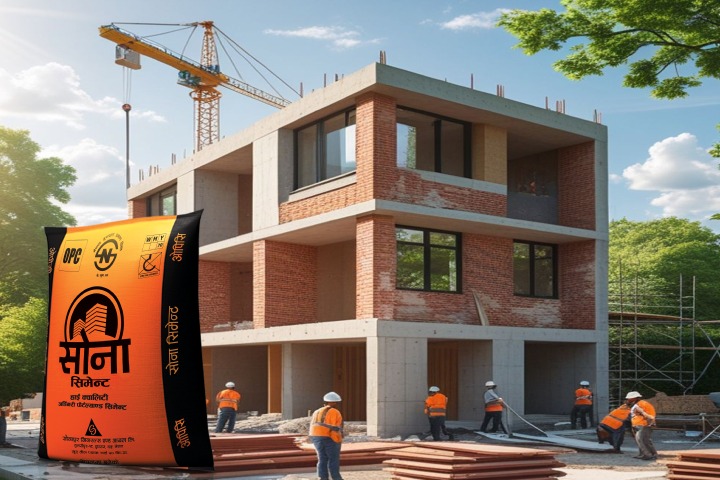
Building a house in Nepal is a major life investment. From selecting land to completing finishing work, every decision affects safety, durability, and long-term comfort. Among all construction materials, cement plays the most critical role because it binds the entire structure together. Using the wrong type of cement or applying it incorrectly at any stage can lead to cracks, leakage, structural weakness, and costly repairs.
This blog provides a complete, stage-by-stage guide on choosing the right cement for house construction in Nepal, considering local soil conditions, monsoon climate, and earthquake risks.
Why Cement Selection Is Crucial for House Construction in Nepal
Nepal’s houses must withstand multiple challenges:
- High seismic activity
- Heavy monsoon rainfall and humidity
- Variable soil conditions across regions
- Temperature variation between seasons
Using high quality cement suited for each construction stage ensures safety, durability, and lower maintenance costs over time.
Cement for Foundation Work
The foundation carries the entire load of the house and transfers it safely to the ground. Any weakness here affects the whole structure.
Best Cement for Foundations
Portland Pozzolana Cement is generally preferred for foundation work in Nepal.
PPC cement Nepal offers:
- Lower heat of hydration, reducing thermal cracks
- Better resistance to soil moisture and groundwater
- Improved long-term strength development
This makes it ideal for footing, raft foundations, and underground RCC elements.
Cement for Columns, Beams, and RCC Structure
Columns and beams form the structural skeleton of the house and must resist both vertical and lateral loads.
Best Cement for RCC Work
Ordinary Portland Cement is widely used for RCC structures.
OPC cement Nepal is suitable because:
- It provides high early strength
- It bonds strongly with reinforcement steel
- It supports earthquake-resistant design
OPC cement is commonly used for columns, beams, and slab casting.
Cement for Slab Casting
Slabs support floors and roofs and are exposed to bending stresses.
For slab casting:
- OPC cement is generally preferred
- Controlled water-cement ratio is essential
- Proper vibration and curing improve slab strength
High quality cement ensures crack-free and durable slabs.
Cement for Masonry Work
Masonry walls provide enclosure and load distribution. Mortar quality is critical for wall stability.
Best Cement for Masonry
PPC cement Nepal is ideal for masonry work.
It offers:
- Better workability of mortar
- Reduced shrinkage cracks
- Improved resistance to dampness
PPC cement helps masonry walls perform better during earthquakes by allowing slight movement without cracking.
Cement for Plastering Work
Plastering protects walls and improves appearance. Poor plaster quality leads to cracks, peeling, and damp patches.
Best Cement for Plastering
PPC cement is widely preferred for plastering in Nepal.
Benefits include:
- Smoother surface finish
- Lower risk of shrinkage cracks
- Better durability in monsoon conditions
Proper curing after plastering is essential for long-lasting results.
Cement for Flooring and Finishing Works
Flooring, skirting, and minor finishing works require consistent setting and smooth finish.
Using quality cement ensures:
- Even floor surfaces
- Strong bonding with tiles or stones
- Reduced surface defects
Fresh cement with controlled fineness delivers better finishing quality.
Importance of Cement Quality Control
Consistent cement quality is essential across all construction stages.
Reliable cement manufacturing in Nepal focuses on:
- Uniform cement composition
- Controlled fineness and setting time
- Regular cement testing methods
- Batch-to-batch consistency
This consistency ensures predictable performance on-site.
Role of Cement in Earthquake-Resistant Houses
Earthquake resistance depends on how well concrete and steel work together.
High quality cement helps:
- Improve bonding with reinforcement
- Reduce brittle cracking
- Enhance ductility of RCC structures
Correct cement selection is a key safety factor in Nepal.
Common Cement Mistakes in House Construction
Many house defects are caused by avoidable mistakes.
- Using one cement type for all stages
- Adding excess water to concrete
- Skipping proper curing
- Using moisture-damaged cement
Avoiding these mistakes improves overall construction quality.
Why Choose a Reliable Nepali Cement Company
House construction requires cement that behaves consistently from bag to bag.
A trusted Nepali cement company ensures:
- Stable strength development
- Compatibility with Nepal’s climate
- Reliable performance across applications
Sona Cement, produced by Sonapur Minerals & Oil Ltd., is a reliable cement brand used widely in Nepal for house construction due to its consistent quality and suitability for foundations, RCC work, masonry, and finishing.
Practical Tips for Homeowners
If you are building a house in Nepal:
- Use PPC cement for foundations, masonry, and plastering
- Use OPC cement for RCC columns, beams, and slabs
- Ensure proper curing at every stage
- Never compromise on cement quality
Professional supervision further improves construction outcomes.
Conclusion: Strong Houses Are Built Step by Step with the Right Cement
House construction in Nepal requires careful cement selection at every stage, from foundation to finishing. Each part of the house has different technical requirements, and using the correct cement type ensures safety, durability, and long-term value.
By choosing high quality cement from a trusted Nepali cement company like Sona Cement and following proper construction practices, homeowners can build strong, earthquake-resistant, and durable houses that serve their families for generations. The right cement choice today builds a safer home for tomorrow.